Electric “water cannon”. Will the hydrojet propulsion system change the water-powered world?

Luxury yachts and commercial vessels, if desired, can be upgraded to electric ones by installing outboard hydrojet propulsion devices powered by batteries.
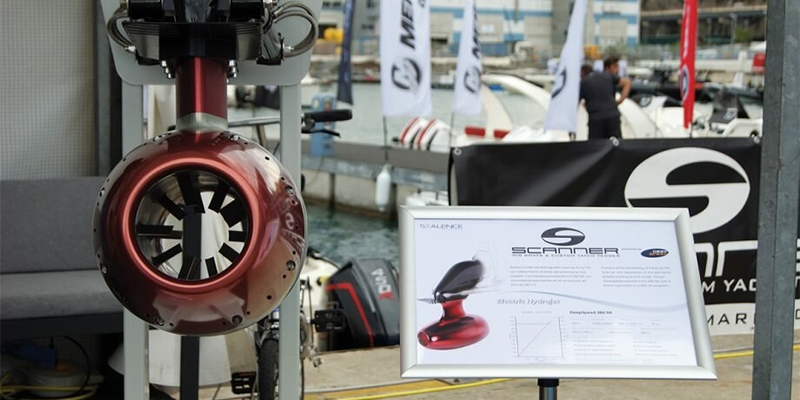
The innovative DeepSpeed ​​propulsion system of the Italian startup Sealence has a design similar to a rim motor: instead of blades attached to a central hub, they are attached to the rim of the hull, and water flows through the middle. At its core, it is an electric water cannon that combines an engine and a power plant in one device.

If you compare DeepSpeed ​​with propellers and conventional water cannons, the benefits are clear. Firstly, mechanical losses during its operation are practically reduced to zero: there are no gears, shafts or universal joints transmitting power from the engine to the drive, but only a pair of wires conducting current from the batteries.
Secondly, the compact and lightweight body, which weighs only 75 kg (without battery), takes up much less space than the engine and fuel tank. Thirdly, unlike a propeller, the efficiency of which decreases with an increase in speed due to cavitation and losses, in DeepSpeed ​​due to the powerful energy of the jet, the efficiency and power-to-weight ratio of boats increases.

DeepSpeed ​​integrates a jet turbine, battery and control electronics, as well as an onboard power system. Thus, Sealence plans to produce power plant kits for the modernization of ships equipped with gasoline or diesel engines.
The business history of “hydro-water jet” was born in the summer of 2007 from a seemingly joke. It was then that the sports boat of William Gobbo, the current CEO and thought leader of the startup, went down. The € 20,000 bill for the repair of an old US 8-cylinder engine, which came by email, was puzzling. “With this money,” William joked in a conversation with friends, “I’d better install an electric motor and save on gasoline.”
A little later, having burst into flames with the idea, he made a computer model of the installation, and the first working prototype was released in 2010.
But only in 2016 the idea received scientific confirmation and became real. The project was joined by Ernesto Bennini, one of the world’s largest specialists in hydrodynamics and jet engines.The 2021 DeepSpeed ​​prototype is similar to the body of a jet aircraft engine. Like a turbo fan engine, it is engineered to direct water (not air) to the front, accelerating it through a smaller exhaust nozzle. The rotating blades of a single-stage impeller create thrust, providing more speed with less energy loss at high rpm.

The faster the boat moves, the more water is pumped into the jet, increasing its overall efficiency. Since the jet engine is located outside the hull and not inside it, the noise and vibration levels not transmitted to the hull are reduced. In addition, such a device does not require an additional cooling system – its efficiency is provided by the oncoming water flow.
Several boat manufacturers are already considering installing DeepSpeed ​​jet propulsion systems on newly developed or existing boat designs when upgrading them.

Amer Yachts and Scanner Marine announced back in April 2020 that they are working on installing DeepSpeed ​​electric hydrojet engines on their Envy 710 RIB.
New power plant DeepSpeed ​​DS-780 with a capacity of 680 hp and a torque of 1500 N • m. has a peak traction power, which is equivalent to a rather “gluttonous” internal combustion engine. The model is expected to be as efficient as possible over a speed range of 16 to 26 knots on semi-displacement yacht hulls. Another powerful but smaller power plant, the DS-420, is designed for fast boats with an expected rated power of 300 hp and a torque of 560 N • m.

Going forward, Sealence plans bringing to market a complete package of hybrid and electric propulsion systems, with a modular lithium-ion battery system, solar panels, a diesel standby power generator and an expanded line of DeepSpeed ​​propellers controlled by a Smartbox. Today these are boats from 9 to 24 meters long.

The story about the DeepSpeed ​​project will be incomplete if you do not mention the story of how the startup found 3 million euros of investment. On the crowdfunding platform, the funds necessary to launch a startup were raised in two stages. The success is impressive and easy to explain. Italian engineers presented an interesting and real working project. The team’s scientific research, constant testing of the startup and the improvement of the product, which is produced by a private company without much government support, are respected.

Yachting in Turkey: service, accessibility and stunning nature

Turkey is an incredible country of contrasts, and here you can safely rent a yacht for a week or two or even a month. After all, the incredible waters of several seas at once – the Mediterranean, the Aegean, the Marmara and the Black – allow you to organize completely different holidays. In Turkey, Western and Eastern cultures meet at the same time, where everyone will find something for themselves.

Yachting in Turkey is a trend that is gaining momentum with an incredible scope. Here you can find both quiet bays and stay in a noisy party city. It is not surprising that recently this country has been on a par with the top yacht destinations in Europe, not particularly inferior to Greece in this matter. So why is Turkey so attractive?

First, the yachting season runs from late April to mid-October. The sea here warms up to 25-28 degrees, and the air temperature is 35 degrees. On especially hot days in July-August, the thermometer shows 40 degrees, while a light favorable wind blows throughout the high season, and storms are extremely rare.

Secondly, the coastline of Turkey is a picturesque nature, historical fortresses and castles. There are about 2,000 islands in its water area, and their coastline is incredible caves and stunning beauty of bays. In addition, Turkey is easy to navigate, so it is also suitable for those who want to independently manage their yacht and have minimal experience.

And thirdly, the infrastructure in Turkey is one of the best today. You can moor at the waterfront restaurants, which often have their own pier or pontoon, and some even replenish fresh water and electricity. And what is important, marinas and other services in Turkey are several times cheaper than similar ones in France, Italy or Croatia.

A special feature of sea travel in Turkey is that the route runs along the coast. Therefore, you will most likely have to walk twice along the same places. However, the presence of an incredible number of small towns and picturesque parking lots allows you to plan your trip in such a way as to stop in different places.

The best option for a sea cruise will be the coast of the country from Istanbul to Antalya. It is here that the nightlife is in full swing in Marmaris, from which you can go to the town with history – Fethiye and explore the heritage of Lycia. Or, for example, head for the Teke Peninsula from Antalya and go along the way to the picturesque places of Finike, Demre or Kekove. And if you want to combine a Greek-Turkish journey, then from Bodrum you can go to explore the Greek Dodecanese archipelago. Whichever destination you choose, great weather, light breezes, marinas with excellent infrastructure and mesmerizing nature await you.

The main marinas from which it is always recommended to start exploring yachting Turkey are Bodrum, Marmaris, Gocek and Fethiye. As a rule, the majority of yacht charter offers are concentrated in these regions.

Bodrum

Bodrum is Turkey’s unspoken tourist and yacht capital. It is also called the Turkish Riviera and for a reason: excellent infrastructure, great climate and unique nature. Here you can not only taste local cuisine in the best restaurants, but also enjoy active water sports. From Bodrum, you can make transitions to the Gokova Bay, reaching Marmaris, Knidos or Finike, as well as transitions to the Gulluk, Göcek Bay or the Datca Peninsula.

Marmaris

Once the town of Marmaris was just a fishing village, and now the city and the bay of the same name is a major tourist center. This bay is considered an ideal starting point as it lies between Bodrum and Fethiye. The coastline is made up of pebbly beaches and promenades, and many marinas are located in a more secluded corner a little away from the bustling city center. Although here you can find a lot of entertainment – nightclubs, restaurants and bars.

Gocek

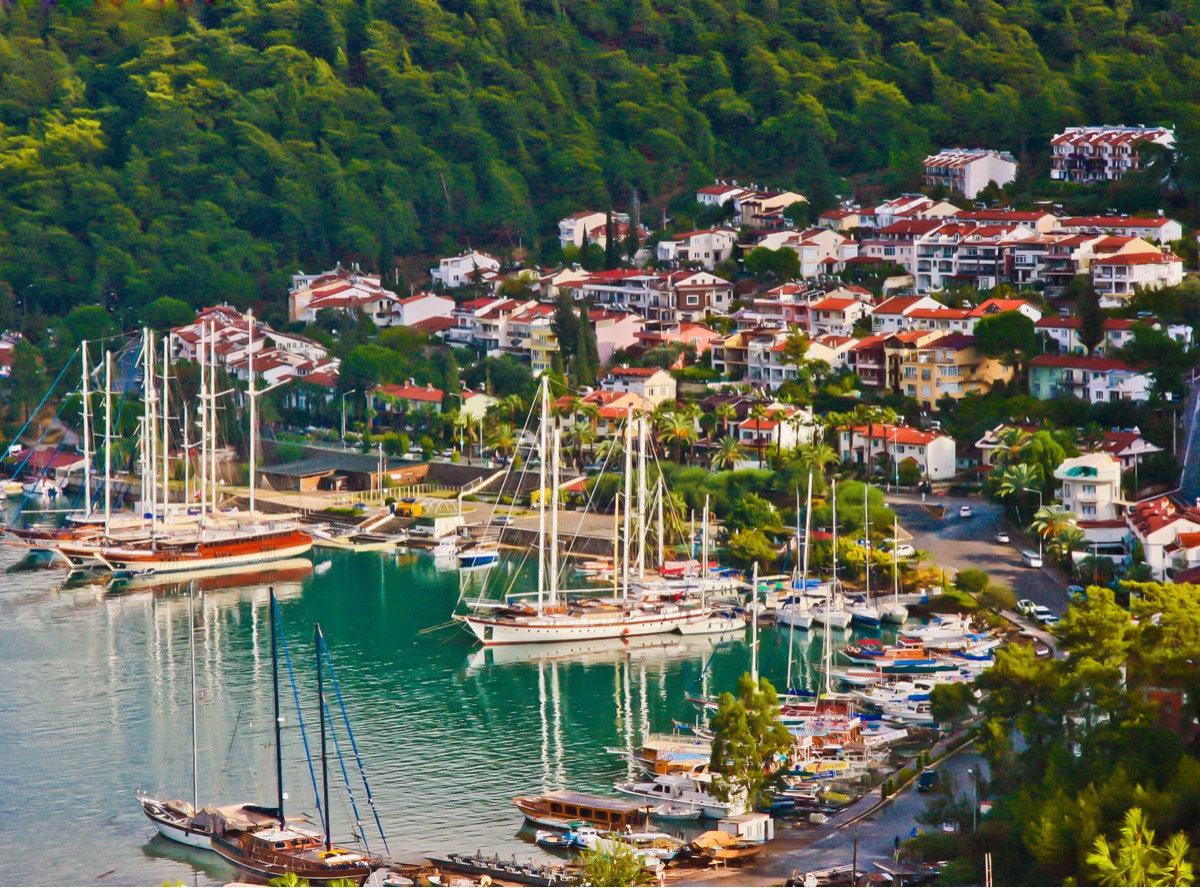
Gocek is located just 22 kilometers from Dalaman Airport. It has many anchoring spots to offer, as it is located on one of the largest bays of the same name in Turkey. In addition to its impressive size, the bay is an ideal water area for relaxing yachting: many small picturesque islands, which are replaced by caves and an unusual coastline, cozy villages and restaurants in lovely bays.

Interestingly, Gocek is encircled by a thin strip of land, where the trees drop their crowns directly into the turquoise waters, and the foliage reflects and plays with the azure waters, creating landscapes of extraordinary beauty. After a modern marina with a developed infrastructure was built here, the town turned from a fishing village into a yachting center. In addition to recreation, there are as many as five marinas with excellent service, and even a shipyard.

Turkey as a Mediterranean destination was one of the first to open for yacht charter during the COVID-19 pandemic.Also, for a long time, special permits were not required to enter Turkey, but today, when crossing the border of this country, you must have a fresh test for the absence of coronavirus with you.

Coming soon, read more about Turkey’s popular yacht destinations in the new issue of YR.

Internet for coastal sailing

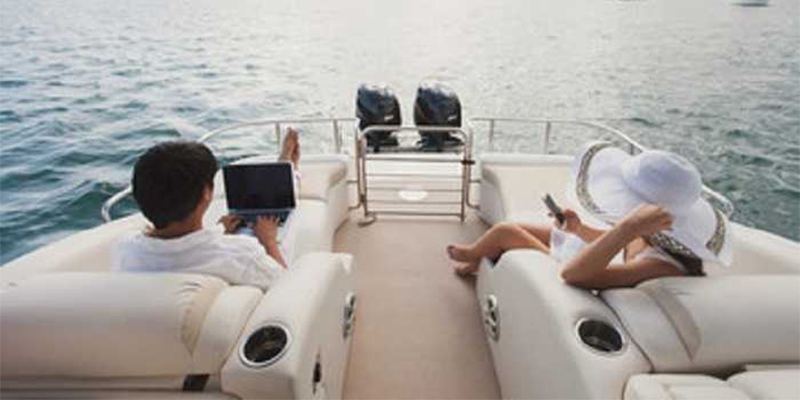
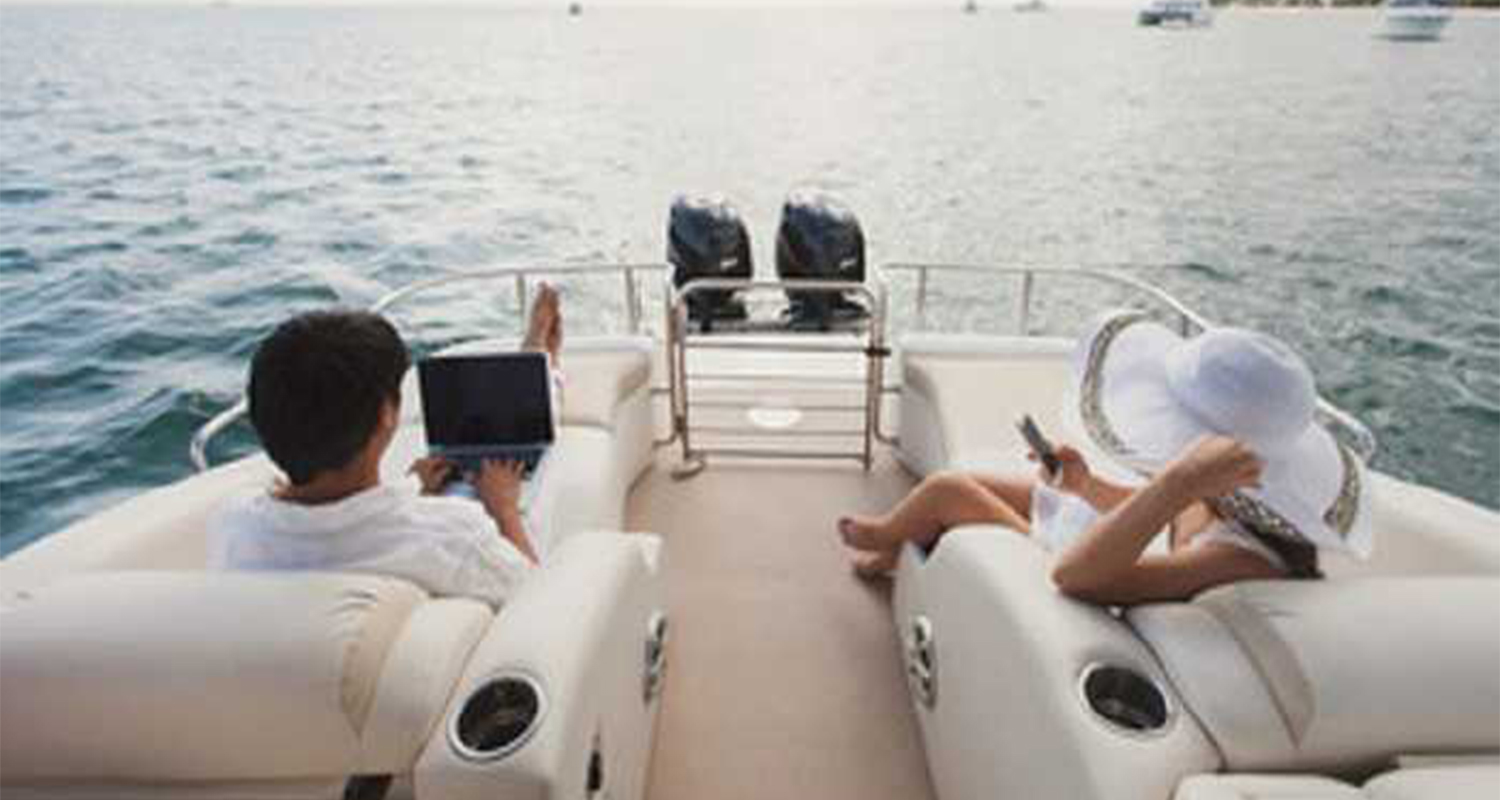
Nowadays, it is becoming more and more difficult to “disconnect” from the routine, even during the rest. And the Internet, which has not so long ago burst into our lives, on the one hand does not allow us to relax, on the other, it is difficult to imagine any everyday life and holidays without it. We are used to visiting familiar websites every day, reading news, receiving emails, solving work issues even on vacation.

We will not talk about the riot of children and adolescents on a ship without the Internet and social networks. So everything is clear. For owners of large and small boats, access to the worldwide network is no longer a luxury, but a vital necessity. However, when traveling, connecting to it can be a major problem due to inconsistent coverage, dead zones and slow speeds.

Due to the high cost of traffic and, often, low speed, satellite Internet is used for emergency communications, navigation and in order to receive information far from the coast. And so far there is no such technology that would be both affordable and has satisfying quality of work.

Therefore, let’s talk about other ways to stay in touch and have access to the Internet when you are on a yacht, at sea and not far from the coast. The choice of equipment that will be needed during the trip depends on how long the ship will be on the way, how many countries and marinas it will visit.

Most marinas provide Wi-Fi networks – this is the most common and least expensive solution for connecting to the Internet when traveling, but good signal quality is a lottery.

But as soon as the ship leaves the marina, moving away from the coast, the Wi-Fi signal weakens and the Internet begins to “disappear”.

In such a situation, you need to take care in advance and purchase a signal amplifier and a WiFi router on the yacht, which, amplifying the signal, will distribute the Internet already within your network. The amplifier antenna itself communicates with the router through a cable; it can be connected to your computer and configured by an IP address.

A Wi-Fi signal booster (WiFi extender, repeater, etc.) is a device that actually just repeats the signal, in fact, passing it further through itself, increasing the range, speed and performance.

Keep in mind that setting up the internet is not always an easy task, especially at sea, additional hardware may be required to complete the installation.

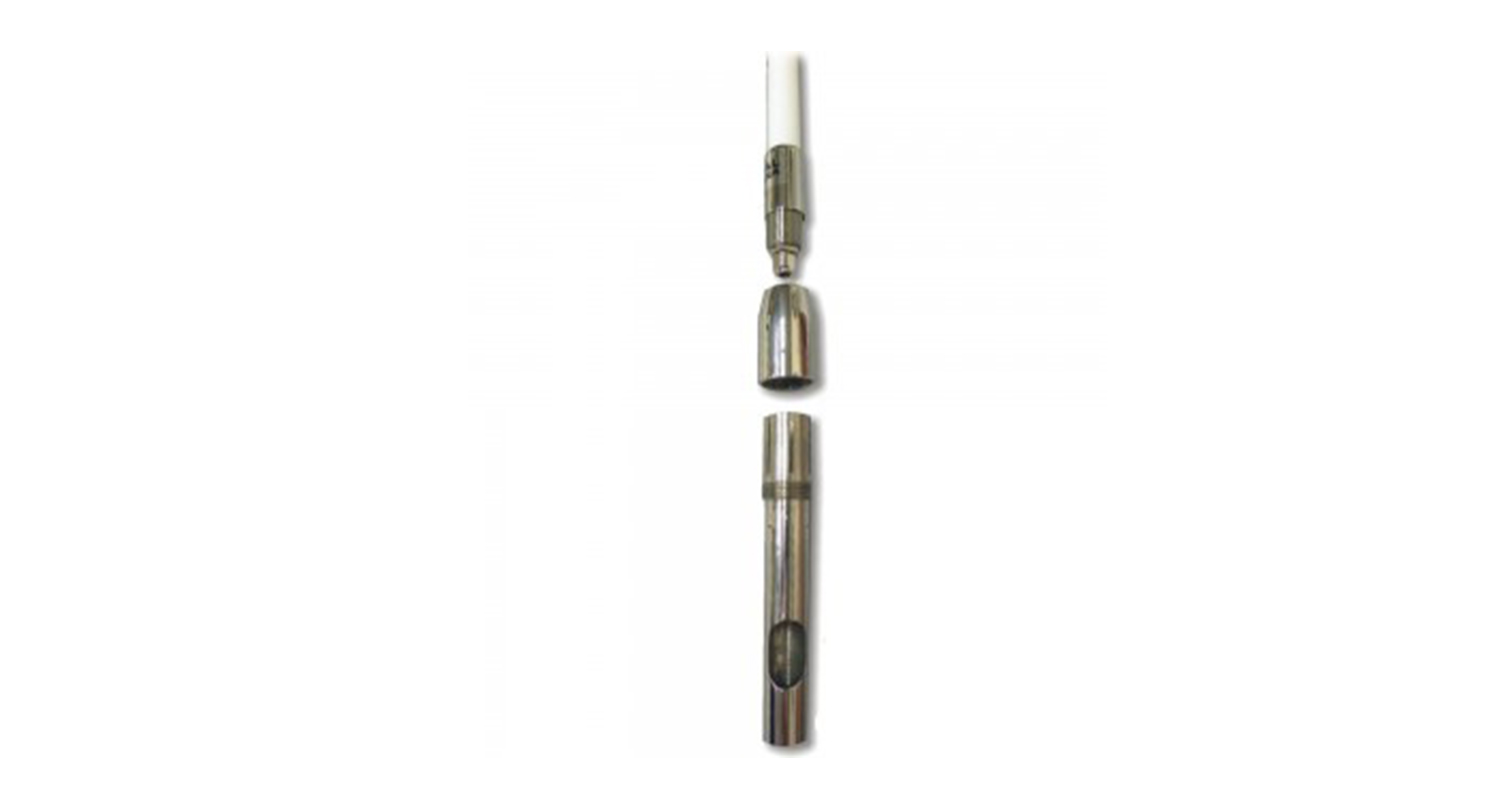
Shakespeare WiFi2 WebWhip Antenna is a fully integrated and waterproof Wi-Fi antenna, radio and router. This antenna is capable of extending the coverage of public hotspots up to 11 km by creating a local Wi-Fi hotspot with any standard Wi-Fi router. Does not require software installation, works from any device with a web browser. Bandwidth 100+ Mbps.


Antenna-amplifier for Wi-Fi signal Wave WiFi Rogue Pro, easy to install, can be connected directly to any device, router or switch with an Ethernet connector. When connected to a wireless router, Rogue Wave Pro DB provides access to most wireless devices on board. At the same time, it does not require the installation of special software (the firmware allows the user to see the access points and monitors the signal quality), all operations are carried out via the network. Covers public Wi-Fi hotspots up to 11 km. Connects to marina networks 2.4 GHz and 5 GHz.

The high-performance EC-HP Wave Wi-Fi Signal Amplifier provides a maximum power output of 1W, allowing you to receive Wi-Fi signals up to 19 km away. Serves as a wireless access point and allows compatible devices to connect to the vessel’s wireless network with Etherne support, allowing it to operate autonomously or integrate into the boat’s network.

What if the Wi-Fi network is not available?

After leaving the range of the Wi-Fi hotspot, you can switch your cell phone to another data / LTE data plan and, using additional equipment, further strengthen the cellular signal. Mobile Internet will be available at a distance of 12-16 km from the coast.

For this you will need:

  • SIM card
  • Modem with SIM card slot (hotspot)
  • Marine Cellular Antenna
  • Cellular Signal Booster
  • The router allows you to automatically switch between Wi-Fi and cellular depending on availability, giving priority to Wi-Fi.

A stationary router will transmit a wireless signal on the yacht, a modem is connected to its USB connector, which, in turn, receives a signal from local providers. You can buy a new “local” SIM card specially for traveling, or use your usual one by connecting it to a profitable tariff plan. Data transmission technologies are becoming more and more – 3G, 4G, 5G, GPRS, it is worth considering this when choosing a telecom operator.

The most “maritime Internet service” so far remains 4G LTE-A, which operates at various frequencies and under various protocols of the region/country. The successor to 4G is the new 5G technology, and its main advantage is speed. The 5G network can transfer data 100 times faster than the 4G network. While the rollout of 5G networks is well under way, it will take several more years to reach levels of coverage and transmission distance similar to that of 4G networks. There are more 4G towers. And there are very few routers with 5G support so far.

The Digital Antenna, a 4-inch digital cellular dual-band antenna, enhances signals in the cellular (824–894 MHz) and PCS (1850–1990 MHz) bands. Omnidirectional (equally receives and transmits the signal in all directions), therefore provides 10 times more signal strength than a conventional mobile phone. Each antenna connects to a mobile phone or cellular signal booster.

Shakespeare World Band Wi-Fi antenna kit and AnyHhere SuperHALO 2G/3G/4G/LTE cellular amplifier. The fiberglass antenna amplifies Internet signals, allows you to receive and send data through Wi-Fi routers located several kilometers away. The kit provides extended cellular coverage, optimized to enhance reception while supporting 10+ users.

As for modems that can read a SIM card, you might want one that is “unlocked” for most cellular companies. You need to find out about unlocked versions of modems in advance from the seller. Most often they choose a 3G or 4G modem that operates in the GSM standard, this is the most affordable and widespread technology in the world.

Netgear LB1120 WiFi 4G / LTE Modem Router – Provides automatic backup 4G / LTE or 3G broadband connection with download speeds up to 150 Mbps.

The key piece of equipment that will combine Wi-Fi and cellular data on the Internet is the router, which will transmit the Internet signal to all devices on board the yacht.

The PepLink Pepwave Surf Soho Router connects to the Internet via USB modem, Ethernet or Wi-Fi. If Wi-Fi is not available, it will automatically switch to your cellular connection. As soon as Wi-Fi becomes available again, it connects back, always keeping its priority.

The Yachtspot Maritime Internet Router provides global 4G and WiFi frequency coverage.

It should be understood that if you are in the zone of an unreliable signal, then all attempts to use the connection will be in vain. Equipment manufacturers are constantly looking for efficient and simple ways to help maintain uninterrupted communications at sea, offshore and ashore.

In the meantime, if your yacht is close to an access point or shore, then Wi-Fi and cellular communication, with the proper equipment, will provide you with a good connection and the Internet.


Echo sounder or fishfinder. What to set on the boat

The most common marine navigation system that detects depth and recognizes objects underwater is the echo sounder. In articles, brochures, and on boxes with goods, you can find many other variations of this term – “fishfinder”, “fathometer”, “sonar”, “depth meter”.

The constantly developing technologies for detailing the shape and structure of the seabed are not only  fishing enthusiasts’ interest.

When buying an echo sounder, first of all, you need to decide how it will be used: mainly for fishing, navigation, or for both. It should be borne in mind that during yachting we are most interested in what is in front of the boat. Unlike fishing, where a good image is often more important than what is directly underneath or at the side.

This is where the “far-sighted” sonar can replace the conventional echo sounder.

Modern sonar models are becoming a powerful tool for both cruising and racing yachts. They provide sufficient image clarity, for example, to distinguish areas of algae or sand in an anchorage. Depth sensors transmit sound pulses or “pings” that are reflected when they hit the seabed.

Much of this improvement is due to the presence of CHIRP sensors, they can distinguish multiple targets by scanning using signals of different frequencies. This allows individual fish to be displayed, for example, rather than simply pointing out shallow water, identifying vegetation on the seabed, distinguishing between sandy, muddy or rocky coastlines, and, when anchored, finding sand on the first try.

By analyzing parameters such as sonar receiver sensitivity, transmitter power, transducer efficiency and display resolution, you can finally decide what exactly you need on your yacht.

Since the echo sounder sends pulses with a certain frequency, the higher this frequency is, the higher the detail of the resulting image will be. Some devices offer dual or multiple frequencies that provide both range and crisp images.

The transmitter power determines the rate at which information is sent. A low-power device will take longer to deliver information, and this is a losing proposition. The echo sounder will require low power at high frequency for shallow water and high power and low frequency at depth for normal operation.

The impulse sent by the echo sounder transmitter is reflected from various objects that it encounters. This allows you to collect information about everything that is in the water column: about the number, size, density of objects, about the structure of the bottom. The display processor processes the information received, resulting in a moving graphic image on the screen.

In order to select the correct display type, you must decide in advance where the fishfinder will be installed. Sunlight won’t be a concern if the display is installed indoors, but if it is placed in direct sunlight, a high-contrast LCD display is likely to be needed. A clear, high-contrast picture can only be seen on a high-resolution display. These displays use vertical pixels and are good at displaying small objects and signals.

Another parameter that is necessary for the correct selection of the echo sounder is the radiation cone or beam width, which the sensor directs to the bottom of the reservoir. The narrower the beam, the less area it covers. Advanced echo sounders have multiple beams, including side beams, which provide greater coverage.

Fishfinder Raymarine i50

The Raymarine i50 fishfinder consists of the latest generation of 3-line Raymarine displays. The i50 comes in several flavors. Pushbutton controls make Raymarine i50 instruments easy to operate. It displays data on depth, speed, distance traveled, water temperature.

Depth sounder NASA Clipper Depth

The Nasa Clipper Depth System consists of a marine echo sounder display and a hull end-to-end transducer. It has audio and visual notification of shallows, a choice of depth display speed, high transmission power, storage of all settings in non-volatile memory, low current consumption.

Sonar B&G Triton 2


It provides key instrument data such as speed, depth, wind direction and heading. Combined with the Triton² pilot keypad, the LCD display can also serve as a complete autopilot control system.

Fishfinder Garmin GNX 20

This is a marine instrument with standard 4-inch anti-reflective LCD display. It has low power consumption, scale mode and graphics for displaying depth, speed, wind and 50 more marine and boat parameters.

Sounder Plastimo Echotest

This portable device requires no installation. It has a fully waterproof housing and takes readings at a maximum depth of 80 meters. The Echotest is equipped with a large LCD display with LED backlighting for use at night. To measure the depth, the instrument is immersed in water. It runs on a 9V battery. This is certainly not the most accurate or best sonar option. Can be used for small boats and short walks.

Sonars

Sonars do not replace existing data sources such as classic sounder, charts and visual cues, but provide additional data to help you make more accurate decisions.

B&G ForwardScan

The system has a 180 kHz sensor, scans the seabed in a 15 ° arc at a distance of up to 90 m in front of the vessel. ForwardScan data not only shows a graph of the depth in front of the boat, but can also be overlaid on the map to indicate safe, warning and critical depths. ForwardScan uses a detachable slim sensor that protrudes 31mm below the chassis.

Echo pilot

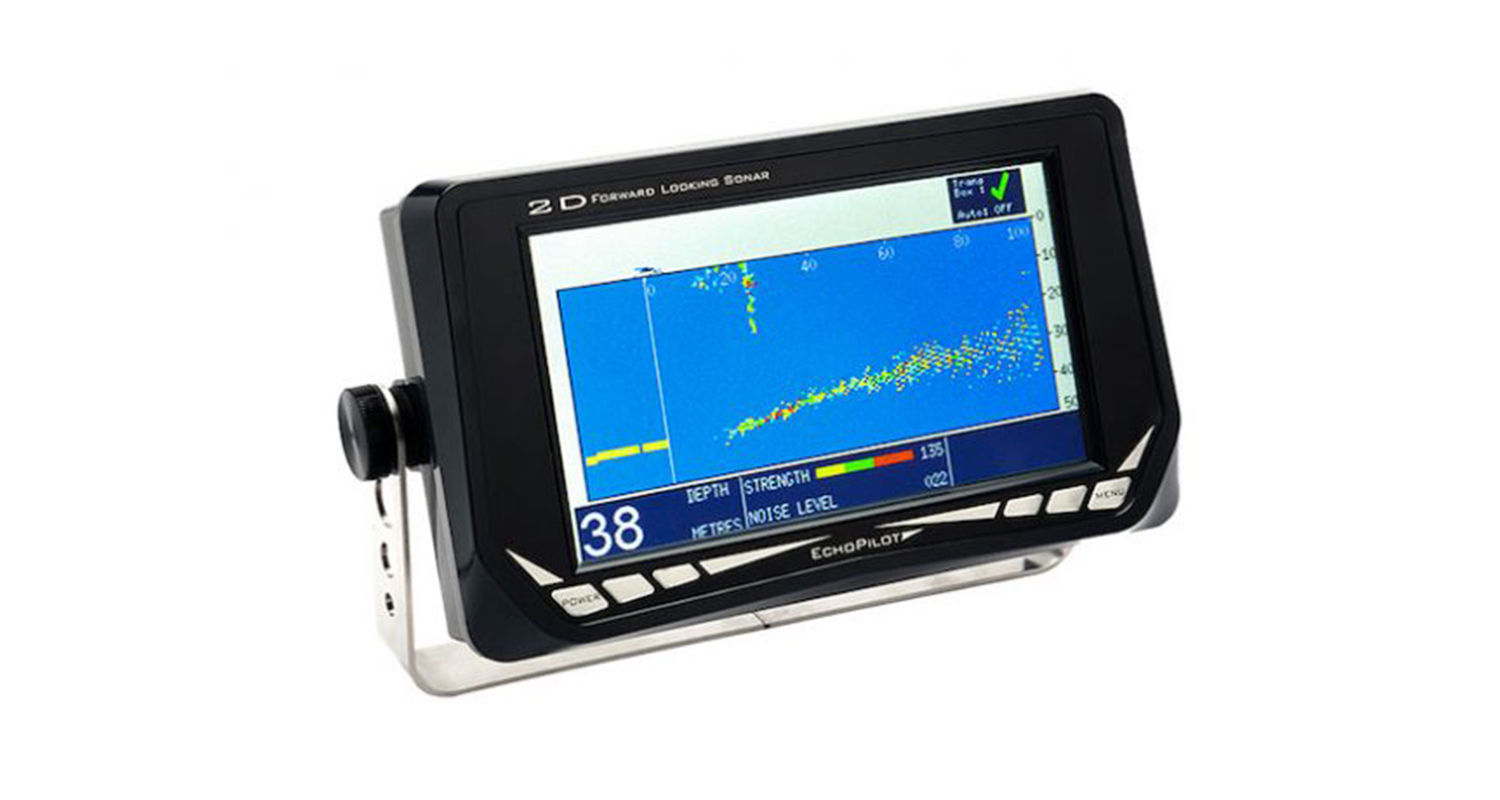
Echopilot is optimized to display as much detail of the seabed as possible. It is updated with very low latency and can be used at speeds up to 20 knots. FLS 2D has a 30 ° beam width and a maximum range of 200 m, which is ten times the depth in shallow water. The bottom structure is visualized on a 7-inch screen, with hard materials such as rocks displayed in red and softer echoes from sand and dirt displayed in blue.

Garmin Panoptix

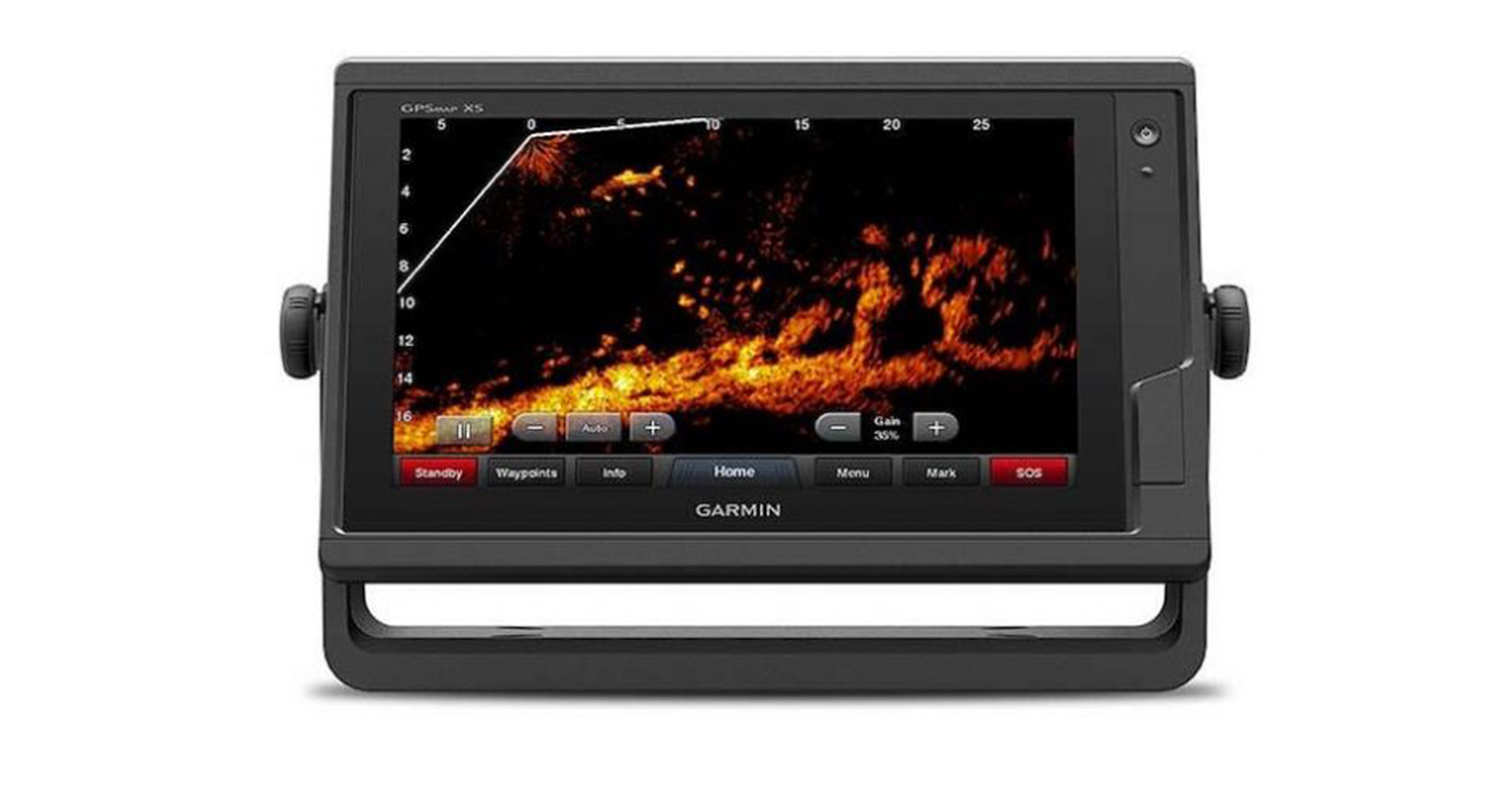
Designed for installation on yachts. It’s sonar sensors pass through the boat’s hull. FrontVü displays the seabed in front of the boat up to 90 m. The scanner has a 20 ° beam width and provides a clear image at boat speeds up to 8 knots. LiveVü Forward allows you to see fish and seabed structure at a reduced distance of up to 30 meters.

When choosing an echo sounder, it is worth remembering the conflict between range and detail.

Low-frequency sonar with a frequency of about 80 kHz can examine objects at great depths, but will not be able to convey special details. Conversely, a higher frequency unit operating at around 200 kHz will show more detail, but at the expense of range. Large and powerful converters can provide a wider range at high frequencies, but they will likely not be easy to install on a yacht.

Best yachting destinations in the Mediterranean. Part 1

The Mediterranean is unbeatable for its choice of beautiful yachting destinations to visit on your holiday on yacht.

Here is part two of our favourite locations for you to add to your holiday wish list.

Balearic Islands – Spain

The Balearic Islands are a must-see for all who sail the Mediterranean Sea. They are home to the widest variety of landscapes and fun you might find in the area.

Ibiza and Formentera Islands

Formentera is located 6 kilometers south of Ibiza.
If Ibiza can be called the “Queen of the Parties”, then Formentera is its complete opposite. Despite its close proximity to Ibiza, Formentera provides a very different holiday. People come here for the sake of delightful beaches with white sand and clear turquoise water, for relaxation, clean air and barefoot walks under the stars.

Mallorca

Mallorca is one of the best spots in the Med and that position is very well-earned. It is home of an amazing juxtaposition of some of the best beaches you´ll ever see, sheltered coves, Moorish and Roman remains and limestone mountains. You won´t regret dropping your anchor in this island.

Menorca

You will not find a single highrise building here – the entire island is a nature reserve. Here time flows slowly, as if basking under the rays of the gentle sun, and the sky and the sea are so piercingly azure that you cannot understand where one ends and another begins. This is a piece of paradise on earth, to which you will certainly want to return,having been there once.

Montenegro

This is a Balkan country that is made of medieval villages and amazing Adriatic-coastline beaches. While you sail the Mediterranean Sea, you can see glacial lakes, limestone peaks and the breath-taking Tara River Canyon which is 1km+ deep.

Kotor Bay (Boka Bay), Montenegro

Boka Bay is the largest and most picturesque bay of the Adriatic Sea. This is truly a miracle of nature: many beautiful bays, ancient cities on the coast, high rocky mountains, approaching directly to the coastline, narrow straits and islands. All this leaves an unforgettable experience for a lifetime!

Malta and its archipelago

Made of many islands, only three of them are inhabited. The area is only 300 square kilometers and is bathed by deep blue Mediterranean waters. These places are not usually crowded by tourists.

La Valletta, Malta

This is the capital city of Malta. It is a city made by gentlemen for gentlemen. The Knights of St. John made this a beautiful place to visit and left behind amazing constructions. The beaches and, especially the harbor are unique and one of the best spots in the Med.

Comino and Gozo – islands of the Maltese archipelago

While yachting around Mediterranean waters, you can find some treasures; Comino and Gozo are two of them. These sister islands offer everything from the Blue Lagoon and its turquoise waters to snorkeling, scuba diving or just swimming. Dropping anchors in either of them is definitely worth it.


Diver’s memo: new diving equipment

The choice of scuba diving equipment should be taken seriously. Of course, you can always rent all the equipment, it is both cheaper and simpler – one and a half dozen kilograms of diving gear will not have to be dragged to another country or to another continent. However, an experienced diver, captain or yacht owner will always confirm that it is much better to have your own equipment, first of all it is a matter of hygiene and self-confidence. The mask, costume, boots fit to the naked body, the regulators are generally located right in the mouth. You are unlikely to prefer someone else’s toothbrush to yours. There is the same point here.

In addition, due to the coronavirus, many trips and plans have to be postponed or canceled altogether. And those who decide to dive in Ukraine should also take into account that rental equipment may not always meet all the requirements and requests of the diver. In general, it would be better to get your own.

In order to determine which equipment should be chosen, the Yachts Review experts decided to give some recommendations on diving equipment and what is needed for diving in general. Conditions for scuba diving can be totally different (depending on the water area the water can be warmer, if it is, for example, the Red Sea, or colder, as in the Arctic Ocean or some Ukrainian quarry), we will focus on universal options.

Before we will consider each gear more detailed, we suggest you look through our checklist, which can be useful for diving. Here you can find out whether you need to check the size or technical suitability of your equipment or make sure you need to buy something or not. We filled out the table while checking our own equipment, it is clear that you have to make your own checklist to your preference.

  to wear to check to repair/to buy
1 Wetsuit + +   OK
2 Mask +  +  NG (not good) to buy
3 Flippers + +   OK
4 Tanks +   OK
5 Computer + +   OK
6 Regulator +   OK
7 Belt and weights + +   OK
8 Buoyancy control device + +   NG to repair
9 Rebreather ??
10 Accessories

+   OK

to buy battery

11 Bag +   NG to buy

Wetsuit

A wetsuit is used to keep your body warm in the water. When water gets under the suit, it is warmed by the body temperature, so it is comfortable to dive in the water. Typically suits about 3 mm are used for warm water. 5 mm wetsuits will do too. For cold waters (12-18 degrees) 5-7 mm wetsuits are usually chosen. The colder the water, the correspondingly thicker the neoprene layer should be chosen.

A dry-type wetsuit is designed for cold water, it is designed on the principle of a spacesuit – no water gets under it, plus there is modern synthetic insulation, so you won’t freeze in one. Warm clothing is available in the form of thermal underwear under the suit.

A wetsuit is an individual thing, different brands make them according to different patterns and you need to focus on many different criterias: weight, height and other physiological characteristics of a diver. The most popular suits are Scubapro, 4element, Santi, Henderson, Aqualung.

Dive mask

You need a mask to see underwater. While choosing it you need to pay attention to the soft silicone and hypoallergenic aspirator, soft silicone spout. Masks can be mono-glass and double-glass. The only difference between them is that you can install lenses in two-glass masks if you have poor eyesight. You can choose Hollis m1 or Aqualung Micromask, for example.

Flippers

There are also two types of fins: open and closed heel.  In warm waters closed-heel fins can be used, they are worn on bare feet. Open heel fins are designed for diving in cooler water and are worn over neoprene boots. They are adjustable to fit your foot, and the foot is protected from the cold under the thick sole of the shoe. Scubapro Jetfin or Mares Avanti Quattro fins can be a great addition to diving in any area.

Dive tank

Gas mixtures help scuba divers to breathe underwater.  They are filled in special cylinders, which differ from each other in volume and material of manufacture.  Usually tanks are made of steel or aluminum, but in recent years composite ones are gaining popularity.  They contain ordinary air that we breathe on land (not pure oxygen), and under pressure it compresses 200 times.

Typical diving cylinders volumes can range from 1.5 to 18 liters.  Most often, divers take with them a main tank (from 10 to 18 liters), an emergency tank (also called bale out, from 0.4 to 1 liter), and a pony tank (an additional small cylinder). The rebreathers which we will highlight below usually use small volumes 1 to 3 liters.

Computer

The computer is an integral part of your diving equipment: it displays depth, water temperature, dive time and nodecompression limit. In case of a computer, consider the Shearwater Terric or Suunto Zoop. Both options have proven themselves well with experienced scuba divers.

Regulator

The name speaks for itself, this device regulates the air pressure in the cylinder to the ambient pressure. It is also called the “diving octopus” – due to the large number of hoses it vaguely resembles an octopus. The regulator has a first stage, which is screwed into the cylinder valve and reduces the pressure to 8-12 atmospheres; it includes two breathing air sources (one on a shorter, the second on a longer hose). Air enters the second stage, which already reduces the pressure to ambient. The second stage has several hoses, one of which is attached to a barometer (shows the pressure in the tank and the amount of air), as well as a hose that connects to the buoyancy control device.

There are summer and winter regulators, so you need to choose one that suits the water area where you are going to dive. In addition, while choosing the device you should pay attention to the materials from which it has been made. For example, membrane regulators are resistant to clogging in dirty water conditions and can also be used in cold water. Piston regulators, in turn, are distinguished by their durability due to a reliable spring mechanism.

The market leaders today are the Apeks, Atomic or Aqualung regulators.

Belt and weights

Due to the wetsuit, the diver has excessive positive buoyancy and therefore requires lead weights. They are worn either on a weight belt, which is attached at the waist, or can be placed in the BCD, if it has connectors for them. The belts are made of latex, nylon or rubber. Latex is the most expensive, nylon is the most durable, and rubber is the most practical one. In order to achieve zero buoyancy you need to know your weight, the thickness of the wetsuit, where exactly you will dive, whether it is sweet-water or a salt water, and the depth. How much cargo you need will depend on this. Here you can stop at Scubapro, Beuchat or Best Divers belts.

Buoyancy control device

The BCD is needed to regulate buoyancy: inflate it to stay in place, or deflate it to dive and go deeper. There are two of the most popular types: vest expansion joints and wing expansion joints. Usually beginners start training with vests, while more experienced divers prefer the wings as they help maintain a horizontal position in the water and have more lift due to the larger displacement.

One of the best BCD available today is the Halcyon. Their devices are reliable, made of durable materials, and a special system allows you to effortlessly adjust the length of the monostrope. There are built-in weight pockets for lead weights, which will be highlighted below.

You can also pay attention to the Scubapro X-Black model. It greatly simplifies the buoyancy control and is easy to use even when the chambers are completely filled with air.

Rebreather

Special attention should be paid to modern breathing devices – rebreathers. Scuba gear is a system of an open breathing cycle, the rebreather is more complicated – it has a closed cycle. In it, carbon dioxide released during breathing enters a container, where computers analyze its composition, after which the mixture is enriched with oxygen to the level required for a certain depth. The result of the treatment is fed to the diver’s breath. In fact, this device replaces all the main devices at once – a regulator, a buoyancy control device and tanks.

Rebreathers come in different configurations and the choice should depend on the purpose of the dive. For example, it will be enough for underwater photographers to dwell on simpler models that will not allow diving deep, but will allow them to stay under water for a long time. Those who want to set dive records often choose more sophisticated devices. In general, the device is not intended for beginners and amateurs. And the price bites: the price of new models can reach 16 thousand euros.

Accessories

Depending on the purpose of the dive, additional accessories can always come in handy with the main equipment. Buoy and reel are needed in seas where there is a flow. Diving lights come in handy for night dives or sunken object research. A lance and a net will be needed for spearfishing. Lycra T-shirts, neoprene helmets, gloves, knives, even underwater scooters – there is a huge variety of additional elements. Lets not forget about the camera in order to capture all the beauty seen under the water… But the most important thing is a bag for all the uniforms, in order to neatly accommodate everything and conveniently transport it to the right places.

A compressor for “filling” tanks may be very handy, so you will not have to depend on coastal services and worry about where to replenish stocks (of course, if the size of the engine room allows you to place the compressor).

Modern classics and innovations in interior: the main trends of 2021

Trends in interior design are constantly changing. Some of them become modern classics, but others can be forgotten the next year. No one will deny that 2020 was significantly different from everything that happened before. People all around the world started to spend much more time at home, that is why the problem of functional, but at the same time, nice space is extremely acute today.

Here are some main ideas, which will be prevailing at interiors in 2021. 

Comfort above all

The events of the past year forced us to take a closer look at spaces, where we had to spend so much time. First of all home furnishings and personal yachts interiors must be usable and functional.  

Designers believe that in 2021 one of the principal trends will be comfort in the widest sense of this world. Interior designer Sheila Bridges emphasizes that “well-being and resilience are in priority now”. 

Imagine fluffy and soft furniture, natural wood and bookshelves with your favorite novels. Due to the pursuit to comfort and coziness the reimagining of old furniture will also be popular. Vintage dressers on tiny legs, hinged tables, drinks trolleys from the last century 20s — all of this stuff will be found its place in our houses again, thinks Charu Gandhi.

Natural materials   

Using natural and eco-friendly materials — this is an established gold standard for interiors, which is not be going to lose its relevance. Wood, leather, linen, suede, cotton, wool, rattan, and bamboo — all of these materials are allowing to make a stylish and cozy interior, and also suiting to conscious consumption and nature care trends.  

Various textures are remaining an important accent of a stylish interior. Designers suggest experiments with paint and textured plaster to give space some highlights. 

The final focusing point in the interior made with natural materials in neutral colors can be green plants and flowers.   

Multi functionality

The pandemic made many of us ponder about the functionality of limited space. We have to work, relax, make fun and doing sports at home. The trend which was widely used in yachts interior design is gaining popularity on land now.

Multifunctional furniture provides flexibility and versatility. Designers plan to use freestanding rule which allows swapping furniture and decor in case of your desire or need. Perfect symmetry is giving way to relaxed elegance.

Open spaces which effortlessly combine dining area, rest zone, and place for fitness are a very good example of multi functionality. Such a decision is especially popular with yachts owners.

Closeness to nature   

Also, the past year emphasized the importance of existence comfortable outdoor spaces. Now designers want to pay more attention to informal terraces, balconies, and backyards.

We shall not ignore the big windows trend too. It causes good light and allows using beautiful landscapes as additional decor.

For yachts exterior, this tendency means even more attention to the decoration of upper decks, beach clubs, and outdoor descent to the water. So in this case will be creating a real lounge zone with a bar, sun loungers, and a pool.

Superyacht Arctic Owl. Spaceship on the water

Polar Explorer with the comfort of a superyacht is a trend in yacht design that is gaining popularity with every year. Steve Kozloff, a California-based designer, has always had a passion for superyachts, not just yachts, but long-haul and full-displacement expedition yachts. Previously, he has already presented several ideas: among them is the 117-meter long Alexis with a garage for two submarines, and the 113-meter ice-class Caribù sailboat with hangars for three helicopters, and many others.

The new Arctic Owl concept will be part of the Goliath range of expedition yachts. They all have ice-class hulls that can withstand the harshest sea conditions. Arctic Owl is 61 meters long, but not very wide for better fuel economy. In addition to the traditional steel hull with full displacement, it has an aluminum superstructure and a sharp nose that easily handles the ice crust of Arctic waters. The exterior of the vessel is made in a retro-futuristic style. The unusual silhouette combines broken lines and curves, giving the yacht the look of a spaceship from the 60s.

Arctic Owl’s motto is to run away from everyone to the ends of the world! Indeed, the ship will allow you to travel comfortably to the most remote and even lost corners of the globe. Arctic Owl has all the equipment you need for ocean expeditions. There will be a helipad with a hangar for repairs, as well as garages for tenders and the U-Boat Worx Nemo submarine. On the port side there will be beams for lifting and launching expedition equipment and floating craft. The yacht will be powered by two Cummins hybrid diesel-electric engines. The maximum speed will be 18 knots, and the cruising speed – 16. And the main pride: at one refueling the vessel will be able to cover up to 6 thousand nautical miles.

Arctic Owl has not forgotten about the second important component of the concept – superyacht-level comfort. The spacious flybridge will be used for a spa and wellness center, complementing the onboard entertainment with a large indoor pool and a lounge area in the bow of the yacht. Arctic Owl will be able to accommodate ten guests in six cabins, of which two will be represented by master suites with panoramic views. The yacht will be serviced by a crew of six.

Steve Kozloff’s concepts so far only live on paper. However, he believes that such a vessel could be of interest to a person who loves to explore distant corners of the world, rather than having parties on board.

Cannes Underwater Museum and Jason Taylor’s Incredible Sculptures

Diving off the coast of Cannes on the French Riviera and visiting a museum is now easy to combine.
This mysterious museum is open to anyone interested in snorkelling, there is no fee, you just need to take the snorkel and dive. A surreal spectacle – huge masked heads with a height of 2 meters, gray faces with closed eyes rise on the seabed near the island of Saint-Marguerite. And this is not the ruins of an ancient civilization, but the first art installation in the Mediterranean.

Four years ago, the Mayor of Cannes decided to clear the debris (old boat engines, pipes and plastic) from the abandoned coastal part of the island by ordering a project for an unusual underwater park.

So, at a depth of three meters off the coast of France, the stunning underwater Cannes Museum of Sunken Sculptures appeared. It is worth adding that the idea of ​​masked sculptures has nothing to do with the global pandemic. Paradox and coincidence.

These unusual monuments were created by the British artist and sculptor Jason de Cayres Taylor, known for his underwater works. The Masks of the Cannes Underwater Museum is a look into the past of the island of Saint-Marguerite, which will always be associated with the history of the mysterious prisoner – the Man in the Iron Mask – the hero of legends, novels and popular films.

The sculptures in masks are, as it were, divided into two parts, representing the duality of the ocean – on the one hand, strong and indestructible, on the other hand, fragile, suffering from human negligence. The faces of the sculptures are casts of real faces of local residents. They were chosen at random. Taylor placed an ad in the newspaper and invited everyone to plunge into the world of art. Now at the bottom of the ocean there are monuments of a local curator, a small businessman, an obstinate schoolboy, an old fisherman.

The sculptures, made from PH-neutral materials and special marine cement, were brought to Cannes by boat and installed with cranes.

Six large heads, each weighing at least 10 tons and the clean coastal area should attract not only diving enthusiasts. The sculptures were installed in open areas of white sand, trying not to harm the seaweed of Posidonia oceanic. Due to the large amount of oxygen released by the algae, it is called the “lungs of the sea”.

To update the ecosystem of the Cote d’Azur, Oceanic Posidonia was not chosen by chance. Growing for hundreds of kilometers in dense meadows, this seaweed creates a valuable environment for marine life. Posidonia is also an ocean orderly – it “collects” plastic that gets stuck in dense vegetation. Spherical fibers are thrown ashore during storms. In one year, Posidonium balls can catch up to 900 million microparticles of plastic.

This is not Jason Taylor’s first underwater art project. The ocean floor is unstable and underwater figures support ocean ecosystems. Taylor’s sculptures are artificial reefs that attract corals and provide a haven for marine life in the Atlantic, Pacific and Indian Oceans. From Grenada to Australia and Mexico, the artist has created over 1,000 underwater sculptures. Taylor opened the world’s first underwater sculpture park back in 2006 in the Caribbean.

The Cannes Underwater Museum is a great example of how important it is not only to seek out amazing ocean landscapes, but also to improve and create the underwater world ourselves. Or, at least, not to harm this strong, and at the same time, fragile organism, whose name is Ocean. “I think many people mistakenly believe that the most beautiful and fragile part of our oceans is coral reefs,” Taylor says. The main environmental problems are selfishness, greed and apathy, and in order to cope with them, we need cultural and spiritual transformation. But these are just fragile structures. Underwater museums are a drop in the ocean, but this is also the beginning.”

Best yachting destinations in the Mediterranean. Part 1

Yachting in the Mediterranean is like yachting through the beautiful scene of a postcard. You’ll have to continuously remind yourself that this is real life and that you’re actually swimming in this crystal clear water and are actually moored right next to the most beautiful beach on the most beautiful island you’ve ever seen. And you’ll understand why a yachting holiday in the Mediterranean is the best travelling experience you’ll ever have.

Croatia’s Islands

Croatia, the land of 1,000 islands, is an absolute paradise for yachting holidays. Yachting the Croatian coast is a truly unique experience, which includes typical Venetian villages with ancient baths, bell towers, medieval fortresses, quaint taverns and some of the clearest waters and pristine beaches in the Mediterranean. Although the islands stretch from Istria to Dubrovnik, most are clustered in central and southern Dalmatia. Dropping anchor in one (or ten) of these spectacular islands during your yachting trip around Croatia is definitely a highlight of the coastline. You’ll discover secluded coves inaccessible from land, bathe at sunset in spectacular waterfalls and savour delicious local food and wine in the taverns of some of the most beautiful hidden islands.

There are more than one thousand Croatian islands in the Adriatic Sea, all varying in size; from small, tree-covered rocks to some of the larger islands in the Mediterranean. yYachting Croatia’s islands offers everything from stunning national parks, to incredible beaches and 24-hour party pontoons, and each island has its own unique highlight and attractions.

The Greek Islands

The Greek Islands were made to travel on yachts. Greece is known as the Mediterranean home for yachting holidays, and has long been a favourite of travellers and yacht enthusiasts from all over the world. For those who want to explore its beautiful beaches, coves and the many timeless ancient archaeological sites this country has to offer, the Greek Islands are full of picturesque destinations to visit during your yachting holiday. Imagine cruising past classic whitewashed houses in greek style with cobalt-blue doors and rows of red geranium-covered terraces, all overlooking the aquamarine rainbow of the sea below.

There are so many versatile islands—each with their own unique personality, but all sitting conveniently close to each other—that every stop in a new port feels different and fresh. The five main island regions for a yachting holiday in Greece include the Ionian Islands, the Cyclades Islands, the Saronic Islands and Argolic Gulf, the Sporades Islands and the Dodecanese Islands. The Ionian, Cyclades and Saronic, however, are the most popular.

The coastline of the French Riviera

Taking France’s yacht route to the Côte d’Azur is an excellent way to experience some of the world’s dreamiest beaches;. It is an iconic French landscape with numerous national parks and famous destinations like Antibes, Cannes, Monaco, Nice, and St-Tropez. Throughout the whole year, these chic hubs where parties never stop attract elite visitors.

While these resorts might be teeming with tourists who want to have at least a glimpse of celebs, a nice yacht tour to Île de Porquerolles can reveal another side of the French Riviera. Île de Porquerolles is the biggest Hyéres Island where the air is filled with the delicate scent of eucalyptus and pine. With unspoiled natural beauty and jaw-dropping scenery, the island can capture the hearts of the most jaded travelers. It is the best place for those who are longing for a reprieve from yachting along the lively coastline of the French Riviera. Sea excursions to other islands are also rewarding for both mind and body. No doubt, the Côte d’Azur has numerous yachting venues that can satisfy all tastes.