Winter is coming: how to prepare your boat for storage during the cold season

The coming of the first autumn cold weather is a signal to any owner of a yacht or boat that the craft needs to be prepared for the winter period. As a rule, the service life and subsequent launching, and even the pleasure of future trips to the sea, depends on proper preparation and storage in cold conditions.

Place and storage method

Before the start of the winter season, the yacht owner will have to determine where to store his favorite floating craft. There are a great many options, but it is worth choosing based on several factors: size, material of manufacture, climatic conditions and the degree of influence of the external environment.

Since not everyone can boast of having an equipped storage space, many are forced to leave the vessel in the open air, which leads to a strong influence of external conditions. Quite often, a small canopy is erected over the yacht or a thick fabric like a tarp is pulled over to protect it from snow and rain. The same role can be played by a dense, specially made cover with provided ventilation holes to prevent the formation of condensation.

If the ship is supposed to be parked, then it must be installed on special keel blocks, sledges or other auxiliary means so that the distance to the ground is about one and a half meters, so that repair and maintenance work can be carried out if necessary.

Conservation

After choosing a storage location, it is worthwhile to preserve the vessel. In this process, it is important to take into account the cladding material (wood, metal, fiberglass and others), as well as the storage features of individual yacht systems.

Before conservation, you should take care of fragile and sensitive machinery and equipment. For example, navigation devices are quite sensitive to temperature extremes, so they should be removed to heat in advance.

The engine, regardless of type, must also be preserved. The oil from the lubrication system is usually drained, at the same time replacing the fuel and oil filters. All parts are covered with anti-corrosion agents that protect against rust and negative external conditions. During storage, the engine must not be left off for a long time, so from time to time it will have to be started and cranked at idle.

All boat systems must be drained, descaled and filled with antifreeze in order to maximally protect the pipelines from icing. The electrical system must also be inspected, and some of its components, such as batteries and navigation equipment, dismantled.

Stationary fuel tanks are recommended to be filled with fuel with the addition of a stabilizer, and portable ones – to be removed, dried and stored in a well-ventilated area, as well as hoses from the fuel system, previously removed and washed.

Case processing

Each hull material has its own processing order before conservation, but they all start with cleaning and thoroughly removing contaminants.

Fiberglass hull is one of the most popular, but also quite delicate. This is especially true for its coating, so it should not be washed with hard brushes and abrasive cleaning agents. If defects begin to appear on the coating, for example, pimples or swollen parts, it is better to fill them with a special resin, and then, if possible, cover them with a special epoxy-based paint. It is also desirable to treat the metal case with a special paint to prevent corrosion. Of course, these are just the main steps that need to be taken before the start of the winter season. For the rest, it is worth proceeding from the climatic conditions and contacting specialized companies that provide such a service.

Favourable wind: 6 Best Kitesurfing Destinations

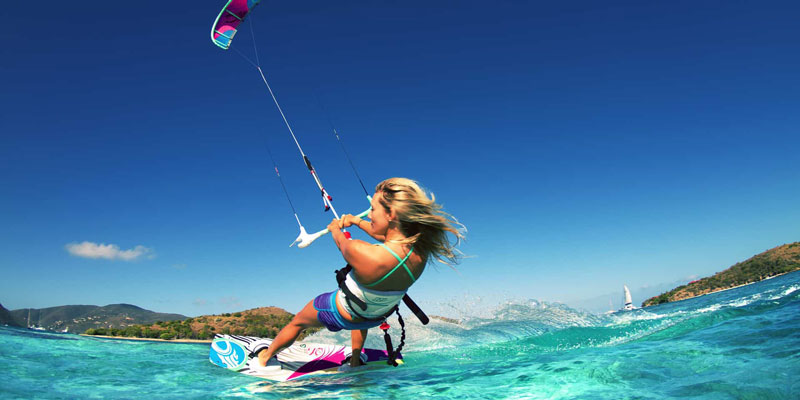
Wind, waves and sun – what else do you need to be happy? Only riding a board set in motion by the force of the wind and a special sail – kite. This is a cross between traditional surfing and sailing, but you don’t need to have record physical strength and endurance.

In fact, kiting is riding on a board using the thrust created by a sail or kite. To keep fit, you can ski even in winter, unlike other water sports – instead of a board, they move around on skis or snowboard. However, the most enjoyable kiting on the water is kitesurfing.

This water sport requires a lot of open space and windy weather, which is why kiters especially appreciate the beautiful islands with a tropical climate.

Cabarete, Dominican Republic

Just half an hour drive from Puerto Plata Airport and you are in one of the best kitesurfing spots – Cabarete. A couple of decades ago, it was a small fishing village, but the excellent climatic conditions (especially the wind, always blowing in the same direction and with the same force) made Cabarete a “Mecca” for lovers of outdoor activities on the coast of the warm sea.

Kite Beach is located, where there are places for surfing, windsurfing or diving. The best time to visit is from mid-December to the end of January when wind speeds fluctuate between 10 and 15 m / s – ideal for kitesurfing.

Le Morne, Mauritius

The famous island of spices in the Pacific Ocean is famous for its incredibly warm climate – the summer here is the coldest and the air temperature does not exceed 25 degrees. Strong winds blow on the island from June to August, so kiters appreciate this time.

Sandy beaches are well protected from high ocean waves by numerous coral reefs. Best for kitesurfing is Cape Le Morne, where beginners can learn in the blue lagoons and experienced athletes catch reef waves.

Boracay, Philippines

The Boracay island, which is not too famous among tourists, is located 300 km from the capital of the Philippines. The winds here are stable (about 10 m/s), while the water is practically calm – a picturesque coral reef protects cozy coves from big waves.

Paros, Greece

On the island there are simply incredible conditions for kitesurfing. Wide white sandy beaches, warm azure sea water, almost complete absence of waves with a stable blowing wind – ideal for both experienced kiters and beginners. The most popular is Pounda Beach.

Nabq, Egypt

In the Egyptian Sharm El Sheikh, you can probably do any water sport – from diving to kitesurfing. A 10-minute drive from the airport is the Nabq area with a shallow lagoon and a bay to the north. This means that you can ride here both on calm water and on waves – the wind does not stop and blows steadily at a speed of 10 m/s.

It is best to come to Nabq in summer, because at this time the water temperature is high and the wind speed is optimal. In winter, there is a risk of plunging into cold water or simply not enjoying the ride due to too strong wind.

Maui, Hawaii

Hawaii’s second largest island is also one of the best kitesurfing spots and is also the home of the sport. In 1990, the first competition was held here – and this is not surprising, because the picturesque sandy shores, warm waters and strong winds allow you to enjoy kitesurfing all year round. Kanaha Beach is recognized as the best kiteboarding destination for beginners, and the western region of the island is for experienced athletes.

Flying car for yacht garage

Inspired by nature, created by people, the PAL-V Liberty is the world’s first car that can not only ride, but fly. Who made the dream of millions come true, what technologies were used and how much does the car cost?  The time is ripe to find out more!

As soon as Nicholas Cugno invented the automobile and the Wright brothers made their first successful flight, people began to dream about flying cars. However, the task was not the easy one. Only a century later the Dutch company PAL-V created the world’s first serial flying car. The pioneering invention became a highlight of last year’s auto show in Geneva.

The body of this car resembles a helicopter cabin on three wheels. It allows two passengers to travel at the same time. But most importantly, the PAL-V Liberty can fly! The process of transforming a car into a “flying” one takes about ten minutes. This is how long it takes for the car to unfold the blades and tail section with the propeller. In addition, such mobility allows you to put the PAL-V Liberty even in the garage of a mid-size yacht, as its dimensions are slightly larger than a crew boat.

The first PAL-V Liberty model, called Pioneer, is equipped with two Rotax engines: 100 hp for road driving and 200 hp for flying. Filling a full tank, you can drive a little over 1,300 kilometers or fly about 400 kilometers, while the boundary altitude for flights is 3.5 kilometers. The maximum speed of the PAL-V Liberty in land mode is 160 km / h, in air – 180 km / h.

In order to get the right to fly, you need to acquire a pilot’s license. And that’s a task worthy of accomplishing! By transferring the PAL-V Liberty to your yacht, you can explore hard-to-reach islands and breathtaking remote areas. Although the car structurally resembles a helicopter, it still takes off and lands like a conventional plane. So, you need an acceleration band. In case of the PAL-V Liberty, a flat surface about 180 meters long, is suitable. For landing, 30 meters is enough.

The PAL-V Liberty Pioneer is released in a limited edition of 90 pieces. It has a bright orange body and black leather interior. The second version, dark red, is the Sport Edition. The carbon and aircraft-grade aluminum used for the chassis ensures durability and safety, while the leather upholstery creates coziness.

“The seaplane principle at the heart of the PAL-V Liberty allowed us to create a safe and easy to fly car. Moreover, we succeeded in making it compact, which is the most important factor in creating a usable helicopter,” says PAL-V Chief Engineer.

The base cost of the car is declared at € 499,000.  In 2021 the first keys will be handed over to their lucky owners. The PAL-V Liberty is designed for those who want to become a part of history and be at the epicenter of the mobility revolution. The times will come when cars that can only drive on land will become a rarity.

Are you ready to fly? We are!

Superyachts’ underwater lounges

With the rapid development of technology, modern yachts never cease to amaze. Metal is being replaced by composite super-strong materials that open up new opportunities for yacht constructions. Thank to underwater lounges you can enjoy breathtaking marine views from the board of superyachts.

What is an underwater lounge?

The underwater lounge, also known as the Nemo lounge, is a place on board with portholes below the waterline. Simply put, it is a unique luxury yacht zone that promises an exceptional experience for the guests. Typically, the walls of underwater lounges are made of laminated and heavy-duty glass. Panoramic windows take up space from ceiling to floor and cover both the underwater part and the above water part. Hence, guests can enjoy spectacular views of fish, sea anemones and algae overgrown driftwood passing by. The underwater lounge itself is most often designed in a minimalist style. Large semicircular sofas and a cocktail bar area are included. Here are some of the most amazing super yachts with Nemo lounges:

Nemo lounges by Abeking & Rasmussen

Abeking & Rasmussen is a German shipyard that has been engaged in shipbuilding lot of decades. The ‘Elandess’ won four interior and exterior design awards last year. Here you can see unique Nemo lounge, which gives the yacht a special chic and creates an indescribable atmosphere of luxury and discovery. The dark blue double-row seats allow you to watch the “underwater theater” live through the huge windows that are 3 meters high and 10 centimeters thick. Special underwater lighting enhances the seascape experience at night.


The shipyard also managed to present another concept called SWATH (Small Waterplane Area Twin Hull). The five-deck expedition vessel will be designed for 166 guests, so it can be used as a full-fledged cruise ship. The vessel is 95 meters long and 35 meters wide. There are two lounges here: the Nemo lounge with underwater panoramas, and the Dolphin lounge in the bow of the boat. The last one allows observing whales and dolphins passing by. The bright plum sofas fit perfectly into the monochrome design of the lounge and contrast with the black mirrored panels and the illuminated floor.

Striking superyacht Feadship Savannah

This yacht immediately destroys the canons of yacht building. There are no usual white hulls, external stairs or a dining table on the main deck here. Feadship and Cristina Gherardi Design, together with the owner of the vessel, have created the largest hybrid yacht that does not fall under any molds. One of the reasons why the yacht is so authentic and striking is that Cristina Gherardi did not specialize in yacht design. Instead, she was into luxury goods trade. Constantly moving from Paris to New York, then to Milan and back to Paris, Christina found new ways to use historic buildings. Today, the world does not stop talking about Feadship Savannah.


In addition to the extraordinary design, the yacht surprises with an original interior layout and sophisticated lighting scheme. The Nemo lounge with panoramic windows catches up attention as well. The glass “wall” in the hull provides guests to observe what is happening both under and above the water in real time. Cozy sofas, black mirrored ceilings and soft ivory carpets – all this not only allows you to comfortably observe the marine life but use this space as a cinema with the hidden screen.

Cruise ship line from Ponant

The Ponant yacht line includes four unique models: Le Champlain, Le Bougainville, Le Dumont-d’Urville and Le Lapérouse. Each of these ships has seven decks and 92 cabins, with a total capacity of 200 passengers. Each ship has infinity pools, solariums and, of course, underwater lounges. They are located on the lower deck offering magnificent panoramic views of the sea depths. Guests can enjoy the beauty of the Panama Canal, the Great Barrier Reef and the Indian Ocean.


The futuristic design of the lounge is replete with curved lines and peculiar white furniture. Neon blue illumination seems to both transfer guests to a spaceship and plunge into the depths of the sea. The central spiral staircase underlines the contrast between minimalistic and sophisticated items that characterize the entire design of the yacht. Frameless glazing stretches in a continuous line and creates the illusion of infinity.


The underwater lounges allow you to enjoy the beauty of the seabed, regardless of the weather and water temperature. Isn’t that wonderful? Which yacht did you like the most? Would you prefer a superyacht with nemo lounge to a dive on submarine?

Treasures of the seas: the richest treasures found at the bottom

Since childhood, we have known stories about pirates and treasures, sunken ships and treasures on their sides. This is proof that archeology is not only in the fields, but also in the sea.

The Caribbean, the real treasure trove of the sunken Spanish Silver Fleet, leads in the number of treasures found and not found. Meanwhile, not only in the Caribbean it is worth looking for gold, silver and ancient treasures, because the richest sunken treasures found not only there.

Nuestra senora de las mercedes

In 2007, in the waters of the Gibraltar Strait near Portugal, a huge treasure was found on a sunken Spanish military frigate. The American company “Odyssey Marine Exploration” raised 500 thousand silver and gold coins, as well as jewelry and jewelry, from its side. However, the company did not announce the ship’s ownership for a long time, and then the information was made public when gold and silver were already shipped to the United States.

Several years of investigation and litigation – and it turned out that the treasures were discovered at the site of the flooding of the Spanish warship Nuestra Senora de las Mercedes, which was attacked by English ships in October 1804 on the way to Spain from Peru and went to the bottom off the coast of Portugal.

In December 2009, a Florida state court ruled that the sea treasure belongs to Spain, and even appeals against the court’s decision left it unchanged, so that all the wealth found in the amount of $ 500 million was transferred to the Spanish government as historical value.

Blue baron

In 2009, in the Atlantic, off the coast of Guyana, a huge treasure worth more than $ 3 billion was discovered. However, these are quite “recent” treasures: during World War II, a ship sank in these places, the holds of which were full of gold, platinum and diamonds.

It was not possible to classify the information about the treasure completely (even the name of the vessel is conditional: Blue Baron), so today there are two versions of its origin: according to the first, the owners of the cargo were the Soviet Union and Great Britain, and according to another version – only Soviet Russia, which paid thus with allies for food, weapons, and clothing. In 1942, the ship was torpedoed and sunk by a German submarine.

Nuestra senora de atocha

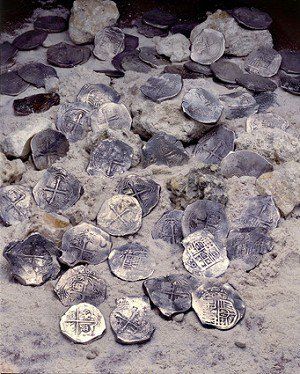
An American archaeologist and treasure seeker, Mel Fisher, has been trying for 15 years to find a Spanish galleon that sank off the coast of Florida in 1622. Sailing ship transported ingots, coins, unique jewelry and precious stones. It was only in 1985 that luck smiled at the seeker: Nuestra Senora De Atocha was found.

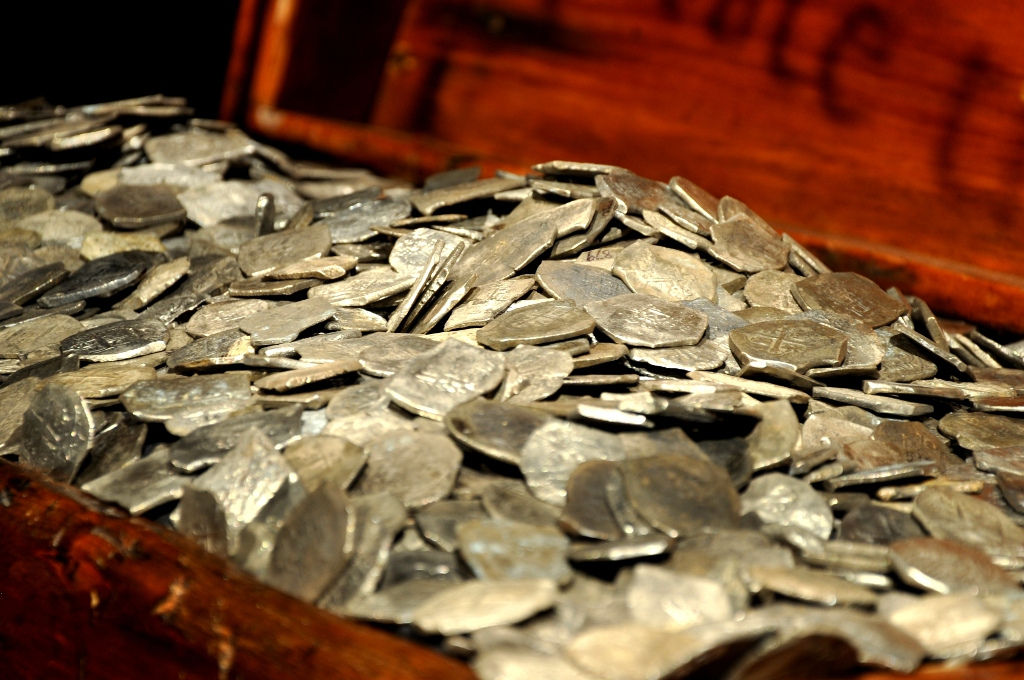
From the bottom of the sea, 3.2 thousand emeralds, 150 thousand silver coins, more than one thousand silver bars, 200 gold bars and many jewelry were raised. The cost of the treasure amounted to 450 million dollars, but that’s not all, because at the bottom there are still treasures worth more than 500 million dollars.

Nuestra Señora de la Concepción

The story of the Concepcion ship is similar to the fate of the Atocha – it was also a Spanish galleon carrying goods from the colonies. In 1641, the ship left Cuba, loaded with so many treasures that they had to be placed on the upper decks. The ship was not designed for such weight, lost its course and did not obey the helm. Once in a storm, the ship got stuck in coral reefs and sank off the coast of Haiti.

Almost 200 people survived, including the admiral, thanks to which the exact place of the shipwreck was established. Already in 1682, the treasure hunter William Phipps with the Indians. searching for pearls, he lifted 28 tons of gold from the bottom. But according to experts, this is only a tenth of what was at Concepcion.

Whydah

In 1717, Whydah, a pirate galley, ran aground, just a few hundred meters from the Florida Cape Cod Beach in Marconi Beach. There were legends about the wealth of the galley, because before the death of the ship, the pirates managed to rob about 50 other ships.

The marine archaeologist Barry Clifford studied ship documents for several years, as a result of which he estimated the treasure at the gallery at $ 400 million – according to the most conservative estimates, the gallery contained at least 4.5 tons of gold sand. Clifford found the remains of the galley in 1984 and managed to raise about $ 15 million from the bottom of the sea treasures.


Of course, this is far from all the treasures found and valued by modern standards. Spanish galleons in the Caribbean, for example, will be enough for a couple of thousand treasure hunters, and researchers even draw up special maps with the approximate location of the remains of the ships. According to the most conservative estimates, about 600 more treasures not found at the bottom of the sea remain.


Motorhome, bike or boat? Electric transformer camper Z-Triton from Zeltini studio

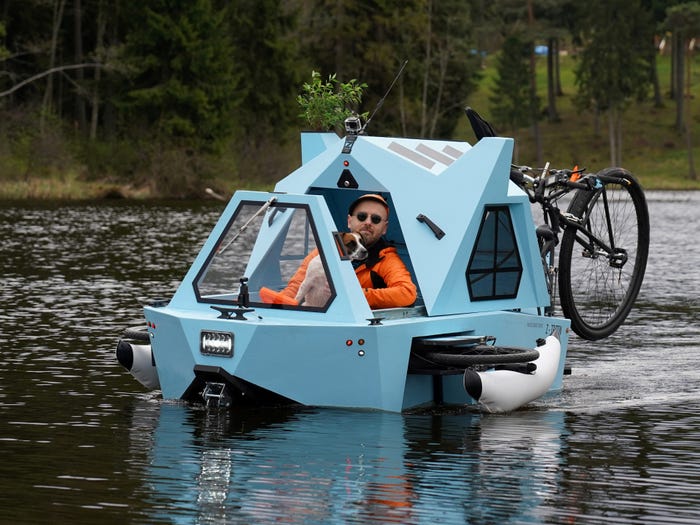
What can move on the ground, swim on the water and become a great place to sleep? This is a novelty of the Latvian Zeltini studio, which its author named Z-Triton.

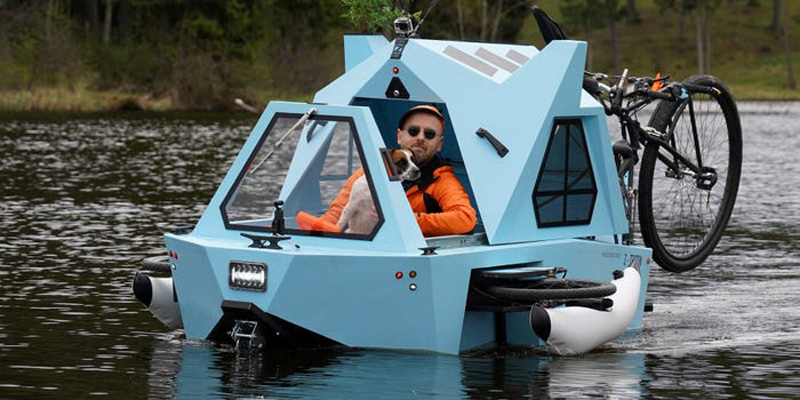
The invention is a small camper that transforms into a boat or tricycle. This is a vehicle that can move both on land and on water, where you can spend the night and prepare some dishes.

The prototype of the amphibian bicycle was created by a resident of Smiltene and landscape architect Aigars Lauzis for the Zeltini studio – whose mission is to create environmentally friendly products and prototypes that, along with functionality, bring pleasure, – was fully embodied in this concept.

Two people can be inside the vehicle. The camper moves on the ground on three wheels, which are easy to fold to go to the water surface. However, when the vehicle changes to water, the driver needs to switch to the stern, which becomes the bow.

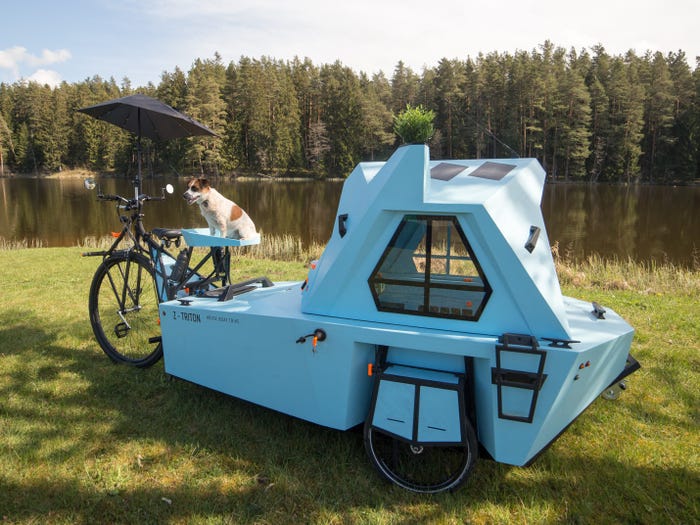
The electric motor and battery with a power reserve of up to 40 kilometers are responsible for the movement, depending on the terrain and the driver. Z-triton is electrically powered, and from the control panel the driver can control power, turn signals, cabin temperature and much more. The prototype is also equipped with flashlights, a buzzer, chargers (USB), comfortable seats with safety belts, holders for bottles and coffee cups, a place for a pet (it can be optionally replaced with a child seat), 6 solar panels and a removable container for plants. Yes, for plants – after all, basil, mint or dill can come in handy on a picnic.


Standing still, the camper turns into a small house where there is interior lighting and even a miniature folding kitchen with an extractor fan and dining table, as well as shelves for storing food or things. All surfaces are folding in order to provide maximum space for rest if necessary.

A prototype camper has been developed, but the company expects to release it on the market by the summer of 2021. Zeltini claims the Z-Triton is ideal for “expeditions around the world” or “camping.”

U-BOAT WORX NEMO: the lightest submarine in the world

It is difficult to imagine, but a mini-submarine can be brought in a regular car.

Once upon a time, the greatest Leonardo da Vinci designed his own scuba diving apparatus, and before him, ancient inventors made attempts to create a ship that could go under water, but not sink. Dreamers like Jules Verne put forward incredible ideas of their time about exploring the depths of the sea with the help of small but convenient capsules.

Naturally, such developments are far from modern submarines, but ideas have occupied the minds of many engineers for years. And if at the beginning of the twentieth century all the forces were devoted to creating huge and terrifying military submarines, then peaceful developments were developed only in our time.

U-Boat Worx entered the market 15 years ago with a series of C-Researcher and Super Yacht Sub. But this project is one of the most noteworthy: the world’s lightest submarine. She was named after Captain Nemo, a character who is associated precisely with the exploration of the underwater world. In principle, the submarine looks like it belongs to the same captain.

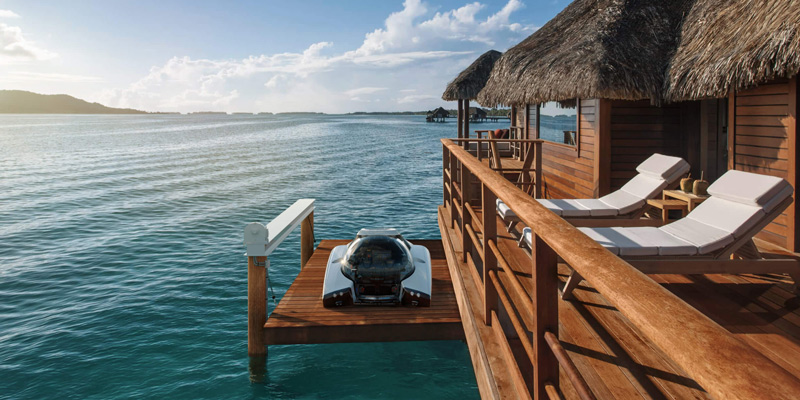
Nemo is only 155 cm high and weighs 2500 kg – it takes up less space than a pair of water scooters. Indeed, this is the most compact two-seater underwater tool. It can be delivered to the seashore on a regular trailer, and towed to the dive site by boat or small yacht.

In the water Nemo moves at a speed of 5.5 km/h, and the battery life at a depth of 100 m is 8 hours. Inside the submarine you can get through the top hatch.

The submarine can be led only by a certified pilot, and the passenger can participate using a special Manta controller, which implements the autopilot function that preserves the course and the set depth thanks to the Marlin controller.

Nemo is equipped with a wireless communications system, air conditioning, and a powerful light to illuminate the surrounding area. The manufacturer also provided for the possibility of installing additional options – a sonar, an external manipulator, navigation equipment and another lighting tool.

Submarine U-Boat Worx Nemo is estimated at $ 1.5 million, but they plan to start producing it only after receiving a sufficient number of orders. Additionally, future owners are invited to take a 12-day management course at the Sub Center Curacao training center.

Custom Line Navetta 30: welcome to a new dimension in Design

The eagerly awaited Custom Line Navetta 30 is the first yacht with an interior design scheme by the prestigious Antonio Citterio Patricia Viel architecture firm and exterior design by Filippo Salvetti.
There are some significant new technical and design features, involving unprecedented solutions for the brand.

A fresh chapter is about to begin in the Custom Line world: the new Navetta 30 yacht in the displacement line will be appearing at the first autumn boat shows for the season 2020-2021. The future of the Navetta range has been outlined by the new super yacht thanks to an in-depth design process that took the seaworthiness, comfort, safety and customisation for which Custom Line has always been renowned and transferred them into a product that is even more ground-breaking, especially in terms of its style and interior design.
With a length of 28.43 m (93 ft) and a beam of 7.3 m (24 ft), it is a product of the partnership between the Ferretti Group’s Strategic Product Committee, headed by engineer Piero Ferrari, and its Engineering Department. The Navetta 30 is also the first Custom Line vessel to boast a combination of exterior design by architect Filippo Salvetti and interior design by architecture firm Antonio Citterio Patricia Viel.

“The new Navetta 30 takes us into a new dimension in design”, explains Stefano de Vivo, the Ferretti Group’s Chief Commercial Officer. “Due to the huge success enjoyed by the new Navetta generation, we want every new project to have the sensational verve of a masterpiece. The Navetta 30 meets this requirement and takes a stunning step forward in the quest to offer Owners and their guests incomparable well-being”.

The classic, perfectly poised profile of the yacht places the emphasis on the way the lines stretch out horizontally, highlighting this aspect of the design so that the vertical connections between the decks almost go unnoticed.

In addition, for the first time the drop from the superstructure on the upper deck has been shortened near the glazed window of the Owner’s cabin, giving the yacht a more streamlined shape that is even racier and sportier. And that is not all: one of the most striking aspects of the new yacht is a gap between the hull and the superstructure, which has been created by raising the joints with the upper deck to form two clearly separate parts.

“The Custom Line displacement range has been expanded by the addition of the new Navetta 30, which blends generous volumes with an attractive, graceful design whose classic charms never grow old. It might have the capabilities of a ship, but it is full of harmoniously balanced visual appeal. It was essential to find the right balance between the hull and the superstructure and emphasise the way the external lines stretch out horizontally in order to add a little vivacious verve to this distinctive, complex creation”, states architect Filippo Salvetti.

The exterior design features large glazed windows in the hull and superstructure, with deck heights of more than 2 m and very spacious areas forward and aft. With finishes and furniture that match those insides, the outdoor spaces can be used not only for dining but also for relaxing and reflecting, thus providing unrivalled potential for people to get a little privacy and enjoy life on board. Great prominence has been given to the connections between inside and outside areas. The former has been opened up to the exterior as much as possible to offer broader, more panoramic views reaching out over the sea to the horizon.

This project breaks new ground in many significant ways, starting with the incredible volumes: its three decks are unprecedented for a yacht of this length. The 100% wide body configuration means that Owners and their guests have a full beam Owner’s suite and lounge on the main deck at their disposal, in addition to four VIP cabins and a crew area on the lower deck. There is a dining area and lounge on the upper deck, which provides access to the integrated bridge that is located further forward. The exceptionally large sun deck rounds off a line-up that is second to none.
To lay the foundations for it all, a brand-new hull has been created, with lines on the bottom that extend it forward. It is designed not only to host very large spaces but also to offer superb performance and minimize consumption.

The innovative interior design scheme was developed in partnership with Citterio Viel. The firm has given traditional maritime style – from the concept to the colour palette – a contemporary twist. The classic design of the curved lines on the furniture and window frames presents a modern outlook on nautical traditions, as does the use of teak. Its timeless allure is complemented by the vibrant “sporty chic” of carbon detailing, surfaces with quartz fibre combined with fibre glass to create customised textures, sophisticated lacquer and fabrics with ultramarine blue stripes.

“The interior design was developed in partnership with the engineers and architects who designed the hull of the yacht”, states Patricia Viel, co-founder of the Antonio Citterio Patricia Viel architecture firm. “BIM enables us to control every single volume perfectly, thus ensuring that the lighting and interior design schemes fit in flawlessly around the shape of the hull”.

The decision was made to reject a more residential outlook and avoid a clear distinction between the yacht itself and the items on board. Built-in furniture was specially designed and made using natural leather, solid wood and plywood, with some exquisite craftsmanship on display. The firm proposed furnishing solutions that were created exclusively for this yacht and two aesthetic approaches: a “textured mood” that was fresher and more youthful, and a less elaborate, more classical “wooden mood” in which wood was the predominant material.

Moving on from the materials and finishes, the interiors of the Navetta 30 – which is the smallest displacement yacht in the Custom Line range – were designed with a big focus on the use of space, in order to make the most of all of the volumes and all of the surface area that was available.

The Custom Line Navetta 30 is ideal for travelling long distances with low fuel consumption and performance at the top of its class. It comes with twin MAN I6 800 mhp engines as standard. They give it a top speed of 14 knots and a transatlantic range of 2,150 nautical miles at a fuel-efficient cruising speed of 10 knots (preliminary data).
Two other twin engine options are available:
• Twin MAN V8 1000 mhp engines, as fitted on the first unit;
• Twin MAN V8 1200 mhp engines.
To give maximum comfort at anchor, the Navetta 30 is equipped with stabilising fins, which can be fitted in conjunction with Seakeeper systems on request.

Comfort and safety are top priorities for Custom Line, as underlined by the fact that the yacht falls within CE Class A and has volumes that have never been seen before in this segment of the market. This is thanks in part to unparalleled soundproofing based on targeted mathematical analysis of each and every source of noise on
board, and the installation of a floating floor to reduce the transmission of sound from the engine room to the living areas, while also softening the sound of footsteps.
The Navetta 30 is under construction in the Super Yacht Yard in Ancona and it is due to make its official debut at the next Cannes Yachting Festival.

FERRETTI YACHTS 450. INNOVATIVE APPROACH

Ferretti Yachts 450 received an innovative hull geometry, while the signature silhouette inherent in the boats of the shipyard remained recognizable. The dynamic pattern of tinted windows, typical of all models up to 100 feet long, is a direct reference to its noble origin. I must say that recently the main trend in the layout of decks has become the integration of external and internal spaces. Such a concept suggests …

RIVA RIVAMARE. ITALIAN MASTERPIECE

Once upon a time, Carlo Riva, the great-grandson of the legendary founder of the shipyard, firmly decided that every Riva boat should become a masterpiece. But for this it’s not enough to be just a beautiful yacht – there are many of them in the world. They should talk about boats under the Riva brand as a legend, so that once born, they will forever take their rightful place in the history of the company. Perhaps Rivamare may well …